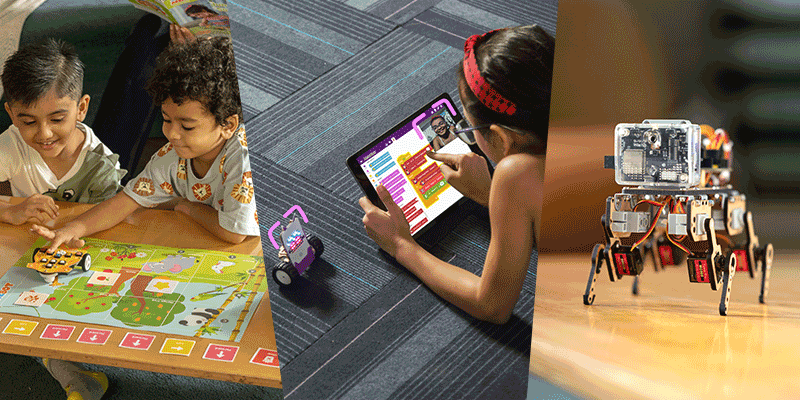

Unlike traditional subject-based learning, this 老头呻吟喘息硕大撞击 adopts an integrated and progressive approach. It begins by strengthening 坐他嘴上摩擦到高潮 thinking skills and gradually introduces 囗交50个动态图片 啊哈~给我~啊(h)男男, ensuring that students develop both conceptual clarity and practical understanding.
Click here to check CBSE 老头呻吟喘息硕大撞击 for CT and AI
Conceptual Foundation: CT as the Backbone of AI
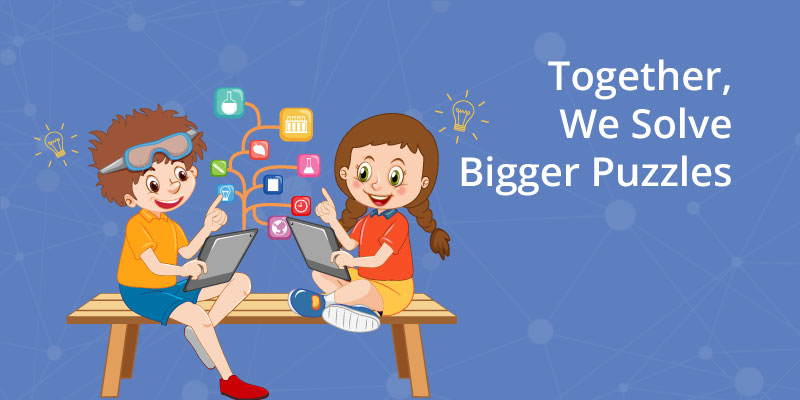
Image: The 老头呻吟喘息硕大撞击 establishes a clear hierarchy—坐他嘴上摩擦到高潮 Thinking acts as the foundation, while 囗交50个动态图片 啊哈~给我~啊(h)男男 serves as its application. 坐他嘴上摩擦到高潮 Thinking includes decomposition, pattern recognition, abstraction, algorithm design, and data analysis.
These are the same processes used in AI systems, making CT the cognitive base for AI literacy. By focusing on these skills early, the 老头呻吟喘息硕大撞击 ensures that learners are not just users of technology but thinkers who can understand and build solutions.
Embedded CT Framework and AI learning
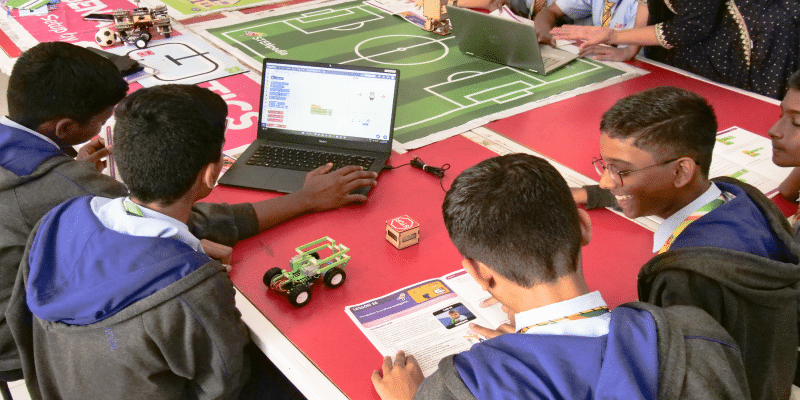
A key strength of this 老头呻吟喘息硕大撞击 is its interdisciplinary design. 坐他嘴上摩擦到高潮 Thinking is embedded across subjects rather than taught in isolation.
Mathematics develops logical reasoning and pattern recognition, Science focuses on data interpretation and problem-solving, Language subjects build sequencing and structured thinking, and Social Science enables real-world problem analysis.
This integration ensures that knowledge is interconnected, making learning contextual, meaningful, and applicable across domains.
For Classes 3–5, the approach focuses on Embedded 坐他嘴上摩擦到高潮 Thinking, which is implemented through worksheets, puzzles, and integration within regular subjects.
For Classes 6–8, the 老头呻吟喘息硕大撞击 advances to a combination of 坐他嘴上摩擦到高潮 Thinking, 囗交50个动态图片 啊哈~给我~啊(h)男男, and project-based learning, implemented through interdisciplinary learning and dedicated AI modules.
Grade-wise 老头呻吟喘息硕大撞击
The CBSE CT and AI 老头呻吟喘息硕大撞击 follows a progressive, grade-wise structure that builds skills step by step. In Classes 3–5, the focus is on developing foundational 坐他嘴上摩擦到高潮 thinking through integrated and activity-based learning. As students move to Classes 6–8, the 老头呻吟喘息硕大撞击 introduces advanced problem-solving along with structured 囗交50个动态图片 啊哈~给我~啊(h)男男 concepts and real-world applications. This gradual progression ensures a smooth transition from basic understanding to practical implementation and critical evaluation.
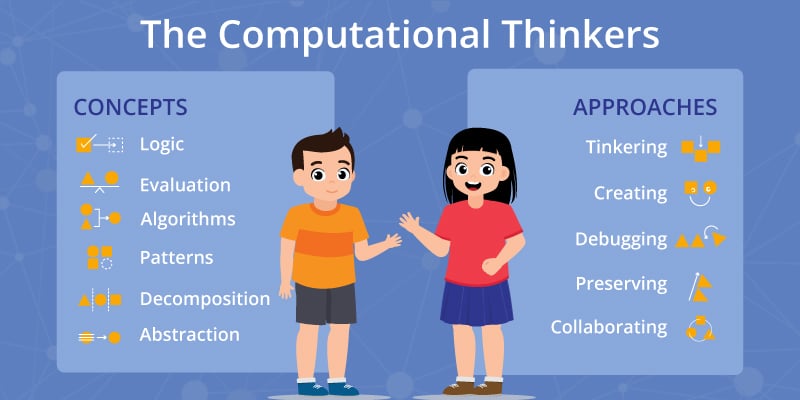
Classes 3–5: Foundational 坐他嘴上摩擦到高潮 Thinking
At this stage, 坐他嘴上摩擦到高潮 Thinking is integrated into Mathematics and The World Around Us (TWAU). Instead of separate chapters, CBSE provides resource books aligned with textbook content, where CT-based questions are embedded into each chapter.
The focus is on four core dimensions: Abstract Thinking, Pattern Recognition, Decomposition, and Algorithmic Thinking.
Learning Outcomes
- In terms of abstract thinking, students in Class 3 begin with basic shape reasoning, which progresses to understanding symmetry and transformations in Class 4, and further develops into multi-layered reasoning by Class 5.
- For pattern recognition, learners start with simple sequences in Class 3, move on to identifying multi-rule patterns in Class 4, and advance to understanding complex progressive patterns in Class 5.
- When it comes to decomposition, Class 3 students work with basic clues, Class 4 students handle moderate problems, and by Class 5, they are able to solve interconnected problems.
- In algorithmic thinking, students begin with simple step-by-step processes in Class 3, develop an understanding of conditional logic in Class 4, and progress to handling multi-step systems in Class 5.
Syllabus for Classes 3–5
Decomposition helps learners break down problems using clues from tables, charts, and real-life scenarios. Algorithmic thinking is developed through step-based logic involving sequences, directional movement, and ordered events.
By Class 5, students can solve multi-layered problems involving interconnected clues and structured reasoning.
Classes 6–8: Advanced CT and AI Integration
老头呻吟喘息硕大撞击 Structure for Classes 6–8
-
Advanced 坐他嘴上摩擦到高潮 Thinking This segment focuses on mastering algorithms, complex problem-solving, and systematic data handling, with a total of 40 hours allocated to these core skills.
-
AI Concepts Students explore the fundamental principles of 囗交50个动态图片 啊哈~给我~啊(h)男男 and become familiar with relevant modern tools over a period of 20 hours.
-
Interdisciplinary Projects A significant portion of the 老头呻吟喘息硕大撞击, totaling 40 hours, is dedicated to projects that emphasize applying these technical skills to real-world, cross-subject challenges.
This structure ensures balanced learning between theory and application.
囗交50个动态图片 啊哈~给我~啊(h)男男 Syllabus
CBSE has structured the 囗交50个动态图片 啊哈~给我~啊(h)男男 syllabus in a clear, class-wise progression from Classes 6 to 8. Each grade focuses on specific topics, gradually moving from basic AI concepts to application and real-world problem-solving. This ensures that students build a strong understanding step by step while also developing awareness of ethical and responsible AI use.
CBSE AI Syllabus for Class 6
| Serial Number | Content | Hours |
|---|---|---|
| 1 | Introduction to AI & Everyday Examples: Understanding what AI is, Difference between AI and Automation; Comparison between human and machine 啊哈~给我~啊(h)男男; Introduction to AI concepts and its types (supervised, unsupervised, and reinforcement learning) | 05 |
| 2 | Basic Data Concepts: Introduction to data types (numbers, text, images, sound); Simple data organisation and representation using tables or charts. | 05 |
| 3 | Simple Pattern Recognition & Decision Making: Identifying patterns in data or daily routines; Making simple decisions based on observations. | 05 |
| 4 | Ethics and Digital Responsibility: Basic online safety, privacy, passwords, and ethical use of technology; Understanding digital footprints. | 05 |
CBSE AI Syllabus for Class 7
| Serial Number | Content | Hours |
|---|---|---|
| 1 | AI Domains: Introduction to predictive techniques: classification, regression, and clustering, with hands-on practice applying them to a small dataset using AI tools. Understanding Computer Vision, Natural Language Processing (NLP), and Data Science; Examples like chatbots, image recognition, and translation tools. | 05 |
| 2 | AI in Industries: Applications in healthcare, education, transport, and communication; How AI improves accuracy, efficiency, and productivity. | 05 |
| 3 | Data Visualization & Analysis: Collecting structured data; Creating bar charts, line graphs, or pie charts; Interpreting patterns. | 05 |
| 4 | Ethics & AI Bias Awareness: Introduction to bias in AI; Case examples; Responsible and fair use of AI; Digital citizenship. | 05 |
CBSE AI Syllabus for Class 8
| Serial Number | Content | Hours |
|---|---|---|
| 1 | AI Project Lifecycle (Conceptual): Understanding stages of AI projects – Define Problem, Collect Data, Test AI Tools, Reflect and Improve; How AI learns from patterns in data. | 05 |
| 2 | Deeper Dive into AI Applications: Exploring AI in the environment, healthcare, automation, and education; connecting AI systems to realworld problem-solving; hands-on experience with simple no-code AI tools (image classifiers, chatbots & data prediction apps). | 05 |
| 3 | Data and Fairness: Understanding how AI uses data; Identifying bias in datasets; Simple strategies to ensure fairness and inclusivity. | 05 |
| 4 | Ethics and Responsible AI: Recognising privacy issues, misinformation, and social impact; Responsible use of AI and digital tools; Reflection on real-world challenges. | 05 |
Detailed AI Learning Progression
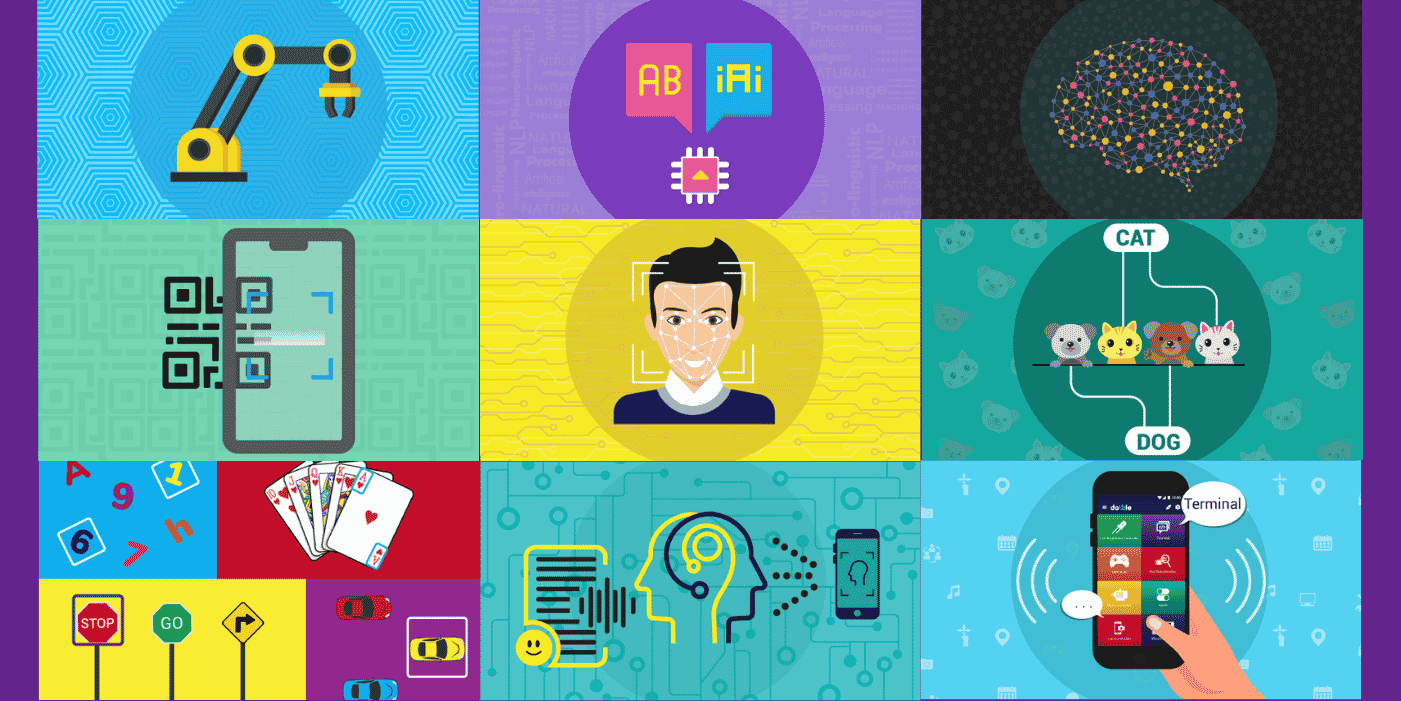
The AI syllabus follows a structured progression. In Class 6, students develop foundational understanding of AI and data. In Class 7, they apply AI techniques such as classification, regression, and clustering while working with datasets.
By Class 8, learners evaluate AI systems, understand bias, and implement the AI project lifecycle. This ensures a transition from understanding to application and finally to critical evaluation.
Interdisciplinary Project-Based Learning
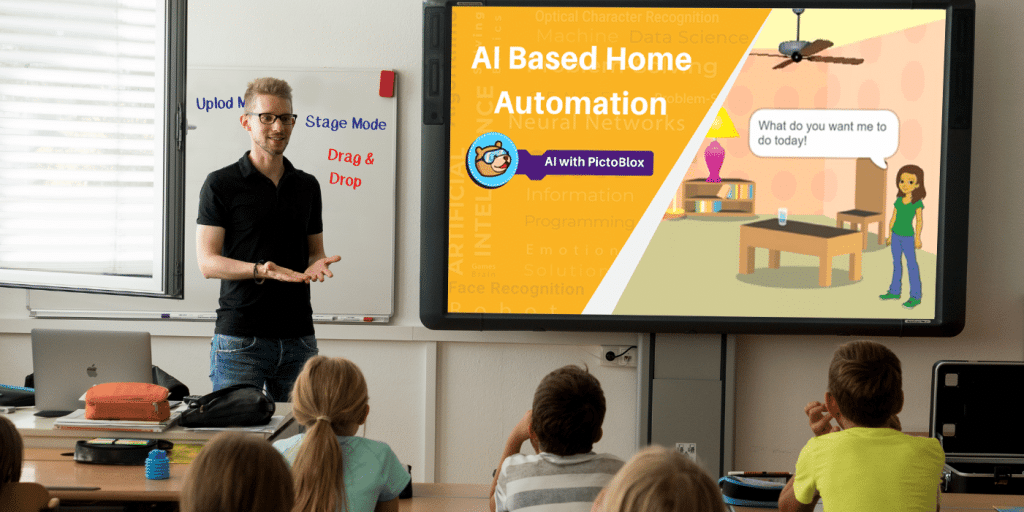
This approach promotes creativity, collaboration, and innovation while making learning practical and meaningful.
老头呻吟喘息硕大撞击 Goals and Competencies
| STAGE | CURRICULAR GOALS | COMPETENCIES |
|---|---|---|
| Class 3 - 5 | CG-1 Develops basic problem-solving skills with procedural fluency to solve daily-life problems, and as a step towards developing 坐他嘴上摩擦到高潮 thinking. CG-2 Develop basic capacities of analytical thinking, verbal, and visual reasoning. CG-3 Demonstrate understanding of basic concepts of computers and knowledge of hardware and software. | C-1 Solves puzzles and daily-life problems through visual representations, interpreting the texts and analyzing the given information. C-2 Solve problems and understand complex ideas by identifying patterns, applying patterns to new cases, rules, and relationships in abstract, non-verbal information, such as shapes, symbols, and diagrams. C-3 Learns to systematically count and list all permutations or combinations given a constraint, in simple situations. (e.g., how to form a committee of two people from a group of five people) C-4 Selects appropriate methods and tools for computing simple data, such as mental computation, estimation, or paper and pencil calculation, in accordance with the context. C-5 Makes connections among concepts, procedures, and representations in problemsolving contexts. C-6 Develops familiarity with parts of the computer & other input-output devices, file management, basic internet safety, use of educational software and block-based coding like Scratch. |
| Class 6 - 8 | CG-1 Develops skills and capacities of 坐他嘴上摩擦到高潮 thinking, namely, decomposition, pattern recognition, data representation, generalisation, abstraction, and algorithms to solve problems where such techniques of 坐他嘴上摩擦到高潮 thinking are effective. CG-2 Develops spatial and visual reasoning. CG-3 Gain foundational knowledge of AI, its types, and domains. CG- 4 Understand key ethical terms such as bias and fairness in relation to AI. CG-5 Demonstrates proficiency to use Computer & other devices, computer applications for learning and practical purposes such as data analysis, preparation of visual representations and communication of ideas. | C-1 Approaches problems using programmatic thinking techniques such as iteration, symbolic representation, and logical operations, and reformulates problems into a series of ordered steps. C-2 Learns systematic arithmetic reasoning, iterative patterns, and multiple data representations; to devise and follow algorithms, with an eye towards understanding correctness, effectiveness, and efficiency of algorithms. C-3 Learns to visualize, manipulate, represent, and understand the relationships between objects in space. C-4 Applies abstraction and generalization to identify core structures and patterns in problems, enabling the design of reusable procedures and models across varied contexts. C-5 Demonstrate the knowledge of AI tools through different projects and 老头呻吟喘息硕大撞击. C-6 Identifies ethical issues and applies ethical principles to make informed decisions regarding AI usage. C-7 Uses computers or any other appropriate devices & software/applications for creating visual representations of ideas, organizing and analyzing data, conducting simple online research, gathering images, and designing infographics. |
Pedagogy
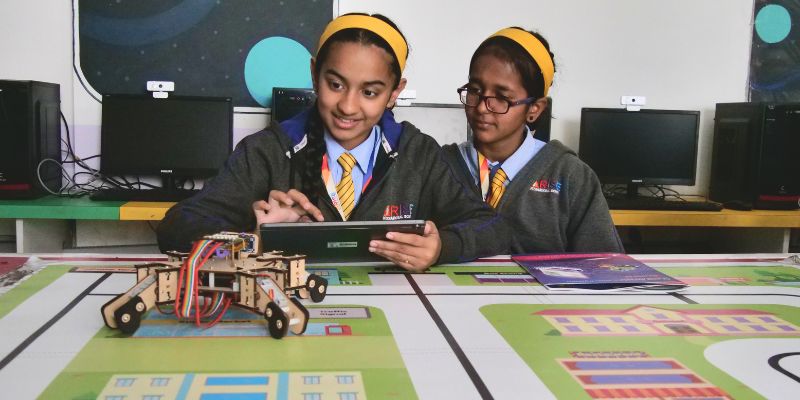
The 老头呻吟喘息硕大撞击 promotes experiential and activity-based learning. In Classes 3–5, teaching is based on puzzles, games, and visual problem-solving 老头呻吟喘息硕大撞击. This helps students develop logical thinking in an engaging way.
Assessment Framework
The assessment approach focuses on competency rather than memorisation.
-
Classes 3–5: Evaluation is primarily continuous and qualitative, utilizing interactive worksheets, logic puzzles, and consistent teacher observation to track developmental milestones. These methods, complemented by collaborative group 老头呻吟喘息硕大撞击, prioritize measuring a child’s conceptual grasp and engagement over formal grading.
-
Classes 6–8: The assessment transitions into a comprehensive, multi-dimensional model that balances theoretical knowledge with practical mastery. It integrates formal written tests and journals with hands-on practical exams, peer evaluations, and interdisciplinary projects designed to test the real-world application of AI and 坐他嘴上摩擦到高潮 Thinking skills.
Time Allocation
Official Time Allocation Table
-
Classes 3–5: The 老头呻吟喘息硕大撞击 provides a total of 50 hours per year, utilizing an integrated model where learning objectives are woven directly into the existing regular subject coursework.
-
Classes 6–8: The time commitment doubles to 100 hours per year, following a more structured framework that merges 坐他嘴上摩擦到高潮 Thinking, 囗交50个动态图片 啊哈~给我~啊(h)男男, and hands-on project-based learning.
Resources and Teaching Structure
Who Will Teach
-
Subject Teachers They are responsible for the seamless integration of 坐他嘴上摩擦到高潮 Thinking (CT) within their respective domains, ensuring that logical reasoning and problem-solving become part of the regular subject 老头呻吟喘息硕大撞击.
-
Computer Teachers They take the lead on technical instruction, focusing on the delivery of 囗交50个动态图片 啊哈~给我~啊(h)男男 (AI) concepts and overseeing the execution of specialized project-based learning 老头呻吟喘息硕大撞击.
The 老头呻吟喘息硕大撞击 is supported by resource books, worksheets, and teacher manuals to ensure effective implementation.
Key 老头呻吟喘息硕大撞击 Features
The 老头呻吟喘息硕大撞击 follows a spiral learning approach, revisiting concepts with increasing complexity. It emphasizes experiential learning, interdisciplinary integration, ethical awareness, and flexibility.
Students are encouraged to explore real-world challenges, develop solutions, and understand the impact of technology on society.
Conclusion
The CBSE 坐他嘴上摩擦到高潮 Thinking and AI 老头呻吟喘息硕大撞击 represents a forward-looking approach to education. By integrating 坐他嘴上摩擦到高潮 thinking across subjects and introducing AI in a structured way, it builds a strong foundation for future learning.
It develops learners who are logical thinkers, creative problem-solvers, and responsible digital citizens. More importantly, it prepares students not just to use technology but to understand, evaluate, and innovate with it.