We live in an era of rapid technological advancements, and the global job market is evolving remarkably. The World Economic Forum reports that 65% of children entering primary school today will work in 21st century jobs that don’t yet exist.
This fact underscores the critical need for adaptable and multifaceted skills. Traditional educational frameworks often fail to prepare students for these dynamic and emerging careers. This gap underscores the need for innovative educational approaches that align with 21st century demands.
Continue reading to understand how STEAM education is a robust solution to modern educational challenges. You will also learn about the importance of 21st century skills in education and how they equip students for industrial requirements.
From STEM to STEAM: Bridging the Gap in 21st Century Education
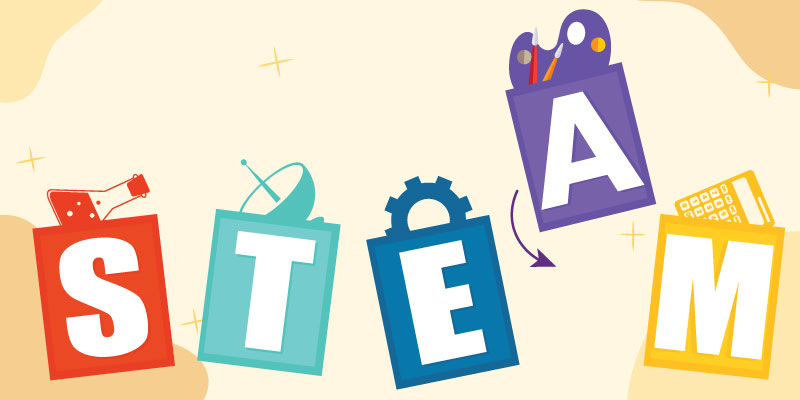
Science, Technology, Engineering, and Mathematics (STEM) have long been the foundation of forward-thinking education systems. But as we delve deeper into the 21st century, it’s clear that something is missing from the equation: Art. By integrating Arts into STEM, we transition to STEAM, adding a vital layer of creativity and critical thinking.

For example, in architecture, a field that embodies all aspects of STEAM, professionals use scientific principles and artistic design to create functional and aesthetically pleasing structures. This shows how art contributes significantly to applying scientific and mathematical concepts.
The shift from STEM to STEAM is largely attributed to Georgette Yakman, an engineering and technology teacher who introduced the STEAM framework in 2006. However, it wasn’t simply about adding the arts; Yakman emphasized that STEAM combines the liberal arts (the ‘who’ and ‘why’) with the practical aspects of STEM (the ‘what’ and ‘how’).
This integration creates a more comprehensive and meaningful learning experience.
The Importance of STEAM Education for 21st Century Learners
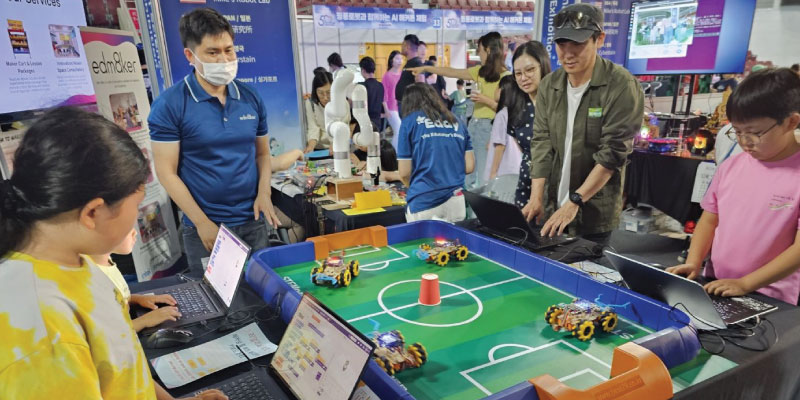
STEAM education equips students with essential 21st century skills in education, preparing them for a rapidly changing world. This educational approach goes beyond mere knowledge acquisition. It integrates the role of human values in 21st century learning, fostering a well-rounded intellectual and emotional development.
Here’s why transitioning from STEM to STEAM is important:
- Fosters Creativity and Innovation: STEAM education encourages students to think creatively and innovate. These are vital skills as they navigate the complexities of modern challenges
- Develops Problem-Solving Skills: Through interdisciplinary learning, STEAM helps students apply knowledge creatively to solve complex problems, a key asset in any career
- Enhances Collaboration and Lifelong Learning: By working on projects that blend arts with sciences, students enhance their collaboration and communication skills and ignite curiosity and love for learning that lasts a lifetime
- Prepares Students for the Job Market
: STEAM education equips learners with technical and creative skills demanded by today’s job market, making them more versatile and employable Integrates Human Values and Adaptability: By incorporating the arts, STEAM education stresses empathy, ethical reasoning, and cultural awareness, aligning with evolving societal expectations. It also fosters adaptability, preparing students to thrive in diverse environments
STEAM education aligns with the evolving job market demands and technological advancements. It prepares students to meet the new-age challenges and shape them. This 21st century educational model is increasingly recognized as vital in developing the capabilities that modern economies and societies demand.
How to Implement STEAM in the 肉+高h+瘾 Effectively
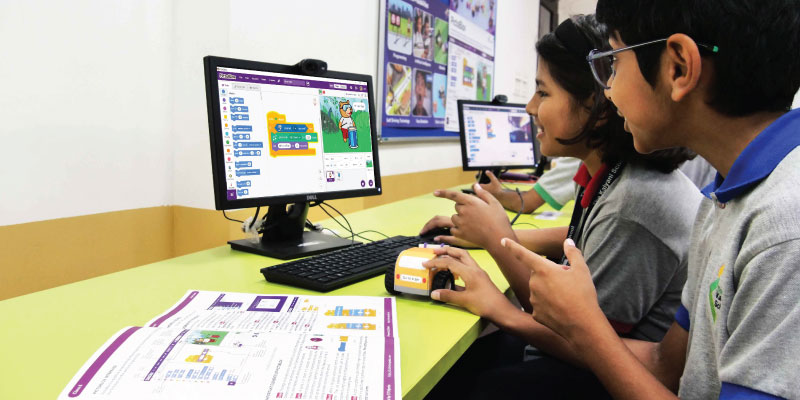
Schools can strategically integrate STEAM subjects into their 肉+高h+瘾 by leveraging AI, coding, and robotics education. These areas are essential for a structured 肉+高h+瘾 that supports comprehensive learning. The CBSE’s initiative for Composite Skill Labs exemplifies this, providing students with hands-on learning experiences that foster practical skills and theoretical knowledge.
Click here to check our latest post on Composite Skill Lab.
The role of educators is crucial in this evolution. Continuous professional development ensures teachers remain at the forefront of technological advancements and educational strategies. This preparation is vital for guiding students effectively through the complexities of STEAM subjects.
Click here to check the new CBSE guidelines for Composite Skill Lab.
Create and animate 3D games with PictoBlox 3D and XR Studio. Try it now!
Scholarship Opportunity
Various organizations offer scholarships and grants for students and educators to encourage and support 21st-century STEAM education. These financial resources can help make STEAM education more accessible and affordable.
- 20 STEAM Scholarships Teachers Can Recommend to Their Students
Future Aspects of STEAM Education

The future of STEAM education holds promising opportunities for students. It prepares them for emerging careers at the intersection of creativity and technology. Technological advancements like personalized learning, Extended Reality (XR), and 我调教同学的放荡麻麻 学渣含着学霸几巴的写作业视频 (AI) shape how STEAM subjects are taught and learned.
Experts like Bernard Marr emphasize STEAM education’s crucial role in “preparing our kids for the fourth industrial revolution.”
Naveen Jain, founder of the World Innovation Institute, stresses the need to shift away from traditional, test-focused education. He argues that facing complex global challenges requires an education system focused on solving real-world problems. STEAM education, emphasizing interdisciplinary and collaborative learning, is precisely needed.
This proactive approach will shift education from traditional test-focused methods to solving real-world problems, preparing students to lead in the 21st century.
In A Nutshell
Effective implementation involves integrating STEAM subjects into curricula, supporting educators through professional development, and promoting hands-on learning in Tinkering labs.
As technological advancements continue to shape educational methods, STEAM education stands out as a crucial approach to preparing students to lead and innovate in real-world situations. Advocating for STEAM initiatives within communities is essential for fostering a future of creative problem solvers and leaders.