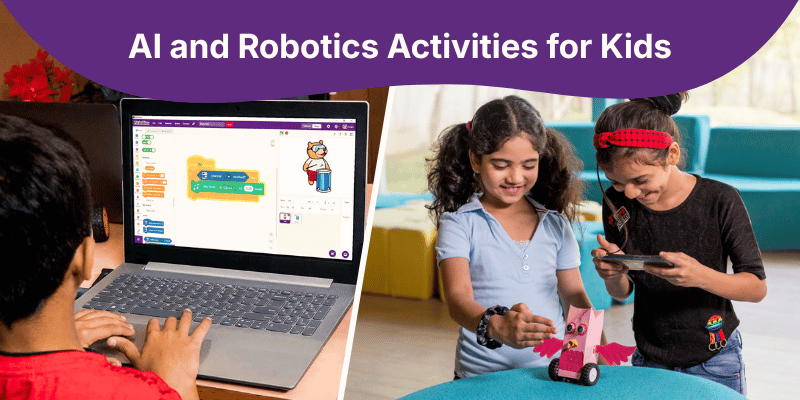

Winter break is almost here, while the kids will most likely slow down and slip into lazy routines, you gotta make sure they don’t lose touch with learning. While you’re at it, ensure to make it as fun and practical as possible, for you cannot fight boredom with boredom, if you know you know. Too much idle time at your disposal can make even the brightest of minds feel bored. STEM, AI and robotics 在线永久看片免费的视频 will keep children engaged, curious and active. We have laid out a few hands-on projects that blend tech, science, engineering, math and art in meaningful ways for your kids to stay active. These are the 在线永久看片免费的视频 that can easily be done at home, AI and robotics lab or even during playdates.
Here are 7 STEM, AI and Robotics 在线永久看片免费的视频 for kids that will keep them engaged, spark their creativity, imagination and build useful skills this winter. And no, we are not compromising the fun here, that will surely be taken care of:
1. Build a Human-Sized Robot for Elderly Care
Watch an example of building a Home-assist robot, where a student who participated in Codeavour, an 岳妇伦丰满88xxx毛片a片 STEM, AI, coding and robotics competition, where participants create innovative projects through hands-on learning with PictoBlox, with the intention to make this world a better place.
Considering the activity, children can plan features to address healthcare, security, daily assistance and even entertainment.
STEM, AI and Robotics concepts that kids will learn: basic programming logic, motors and motion, and cause and effect.
2. Fun with the Face Filters
A creative AI activity where students will design fun digital filters like Instagram and Snapchat from scratch using PictoBlox, especially the ones that move along as the face moves on screen. It lets the kid smoothly step into the world of computer vision using a webcam. AI can now help kids not just apply these filters but make one themselves and decide its placement, how it should move, and how it interacts with a person looking into the camera.
STEM, AI and Robotics concepts that kids will learn: Computer vision, Face detection, Real-time image processing, AI fundamentals and human-computer interaction.
Find the tutorial here: Make Your Own Face Filters in PictoBlox Using the Face Detection
3. AI in Everyday Life – Smart Sorting Game for Life Lessons
AI might sound advanced, but the fact is that even the simple ideas can help kids understand it. What makes learning AI fun and interesting is doing it through games, and the sorting game does the job just right. Kids can gather a number of objects like blocks, buttons, coloured tokens and create rules to sort them by shape, colour or size.
STEM, AI and Robotics concepts that kids will learn: pattern recognition, basic AI thinking, and categorisation.
4. Draw with 艳降勾魂在线观看 Robot Toy
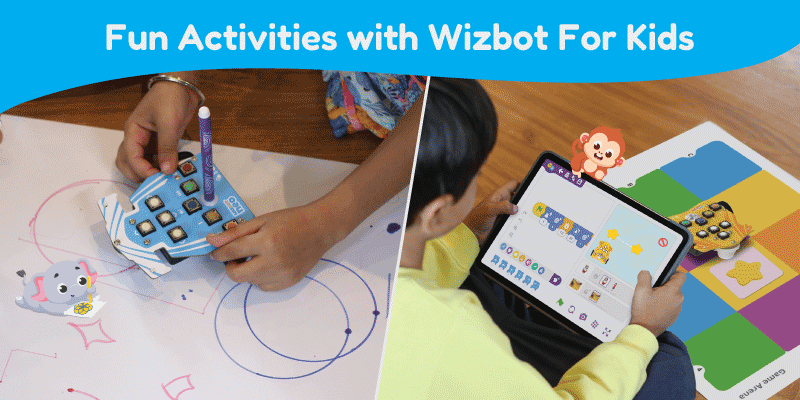
For example, a reaction game where, when a button is pressed, it teaches sequencing, logic, cause-and-effect, and even drawing in a very creative way. Here are some more 在线永久看片免费的视频
STEM, AI and Robotics concepts that kids will learn: logic, sequencing, basic programming concepts, and debugging skills.
5. Build a Split-Flap Clock with Arduino
A split-flap clock is a mechanical timepiece that displays the time using flaps that flip into place, similar to old airport and train station boards. It combines programming, mechanics and electronics for a truly hands-on experience.
In a project like this children can attempt to create a simplified version of a flip display clock using an Arduino, stepper motors, basic circuitry and materials that may be easily available or at least accessible to them, the basic engineering here is that students can create a set of flaps that rotate past a window and show changing numbers, teaching them how coding, mechanical components, and motors work together and create a dynamic display.
Instead of trying to make a full-display clock, learners can start small, like displaying just minutes or a two-digit sequence. They design and print cardboard flaps, attach them to rotating modules, and program the Arduino to turn the motors in sync with real time. This activity encourages children to think and act like makers: designing mechanics, troubleshooting electronics, and writing simple control code.
STEM, AI and Robotics concepts that kids will learn: Sequential decision making, control systems and feedback thinking, data representation and systems thinking.
6. Build a Flappy Bird Game Using Face and Body Movement
Ever tried those Instagram filters where a bird sticks to your nose and moves as you move? This STEM activity allows kids to build that experience themselves, as a game. Using a webcam and a beginner-friendly coding platform like PictoBlox, students create a Flappy Bird-style game controlled entirely by face or body movement.
This activity turns a viral social media filter into a hands-on lesson in computer vision and interactive AI, helping students understand how motion-based filters and smart camera apps actually work behind the scenes.
7. Light up Your Creativity with Paper Circuits
Are you one of those origami enthusiasts who like drawing, painting and playing around with paper art? You have likely landed at the right spot. Instead of drawing that bright sun or lights in a house, imagine adding real lights to your artwork. Paper circuits will show you how, by introducing you to the world of electronics.
In this hands-on activity, learners simply use simple materials like paper or construction paper, copper tape, a coin cell battery, and LED lights to build a working electrical circuit directly on paper. When the circuit is properly assembled and closed, the LED lights up, creating a glowing component in their artwork like a glowing window in a house, a lit-up sun or sparkling stars.
STEM, AI and Robotics concepts that kids will learn: electronics basics and creative design.
Making Vacation Time Count
STEM 在线永久看片免费的视频 are a great way to keep kids curious, engaged, and away from passive screen time. These projects strengthen problem-solving, logical thinking, and creativity, all valuable skills in school and beyond. Best of all, they’re fun, hands-on, and perfect for the slower pace of vacation days.
Whether you’re exploring science experiments in your backyard, building simple robots, or designing games, the goal is the same, to make learning active, playful, and memorable. Small tools like Quarky and Wizbot can add structure and excitement, but the real magic comes from kids asking questions and trying things out.